
Goa beach huts are the cheapest way to sleep ten steps from the sea. In 2026 a basic bamboo hut in Agonda starts around ₹1,200 a night in the shoulder season, while a sea-facing AC cottage in Palolem can touch ₹6,500 over Christmas week. This guide breaks down real hut prices beach by beach, when to book, and which huts are worth the money.
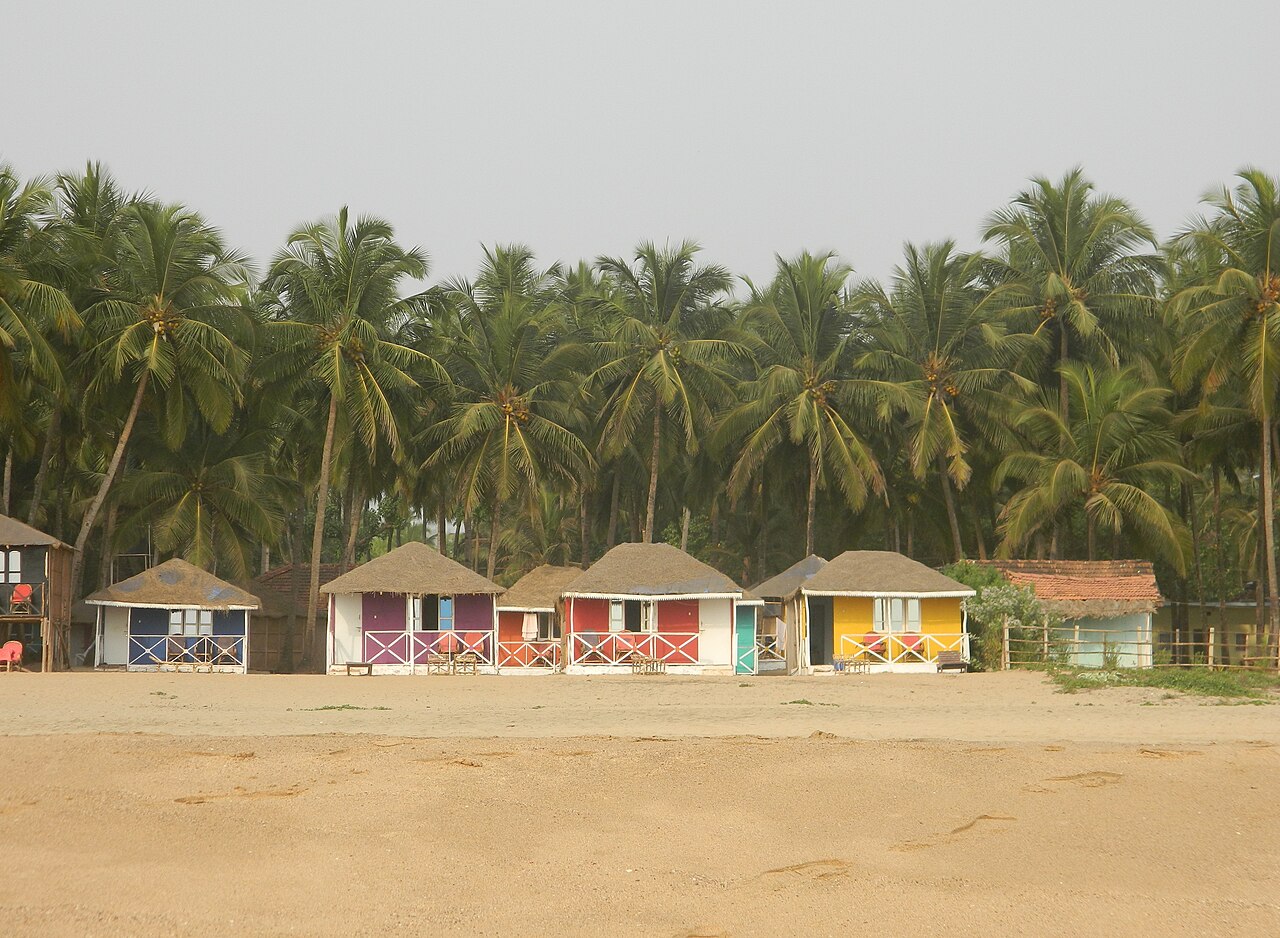
What exactly is a beach hut in Goa?
A beach hut is a temporary wooden or bamboo cabin built on the sand every October and dismantled before the monsoon in May. Because the structures are seasonal, prices swing hard with demand and almost every hut is family-run. Most huts include a bed, a fan, a mosquito net, an attached bathroom and a small verandah with two chairs facing the water. Upgraded cottages add air conditioning, hot water and a proper mattress.
Huts are strictly a November to April product. If you are travelling in June or September, read our Goa monsoon guide instead and book a concrete guesthouse.
Goa beach hut prices in 2026 (per night)
| Beach | Basic non-AC hut | Sea-facing AC hut | Peak (20 Dec–5 Jan) |
|---|---|---|---|
| Agonda | ₹1,200 – ₹1,800 | ₹2,800 – ₹4,500 | ₹6,000 – ₹9,000 |
| Palolem | ₹1,000 – ₹1,600 | ₹2,500 – ₹4,000 | ₹5,500 – ₹8,500 |
| Patnem | ₹900 – ₹1,500 | ₹2,200 – ₹3,500 | ₹4,500 – ₹7,000 |
| Arambol | ₹700 – ₹1,200 | ₹1,800 – ₹3,000 | ₹3,500 – ₹5,500 |
| Ashwem / Mandrem | ₹1,500 – ₹2,500 | ₹4,000 – ₹7,000 | ₹9,000 – ₹15,000 |
| Baga / Calangute | Huts rare, hotels instead | ₹2,500 – ₹4,500 | ₹6,000 – ₹10,000 |
Agonda beach huts — the quiet, family favourite
Agonda is a 3 km strip in South Goa with almost nothing but huts, a single road of cafes and turtle-nesting sand at the northern end. It is the best pick if you want to sleep to the sound of waves and be in bed by 11 pm. Long-running clusters such as Agonda Paradise, Simrose, H2O Agonda and Fatima Guest House sit directly on the sand; the huts one lane back cost 30–40% less and are still a 60-second walk to the water.
Practical notes: the sea at Agonda has a strong shore break in November, ATMs are limited to two on the main road, and the nearest railway station is Madgaon, roughly 37 km away. Full details are in our Agonda Beach guide.
Palolem’s crescent bay is calmer for swimming and far livelier after dark, with silent discos on Saturday nights. Huts here are packed shoulder to shoulder, so ask for a corner unit or one on the quieter Colomb end if you are a light sleeper. Palolem is about 9 km from Agonda — roughly ₹400–₹500 by taxi — so many travellers stay in one and eat in the other.
North Goa alternatives
Arambol is the budget king: simple cliffside huts still go for under ₹1,000 outside peak weeks, and the drum circle at sunset is free. Mandrem and Ashwem sit at the other end of the scale, with boutique luxury huts that are really canvas villas with rain showers and yoga decks. Around Baga and Calangute, actual sand huts have mostly been replaced by concrete hotels — see our beach-by-beach comparison before you decide which coast suits you.
When to book, and how much you save
- November and early December: huts are freshly built, rates are at their lowest, sea is clean. Best value of the season.
- 20 December – 5 January: prices triple, minimum stays of 4–7 nights are common and full prepayment is demanded. Book by September.
- Mid-January to February: the sweet spot — good weather, normal prices, easy walk-in availability on weekdays.
- March and April: heat builds and huts start closing from mid-April. Bargaining works well.
Outside Christmas, walking in and negotiating in person is still the cheapest route: owners routinely knock 20–30% off the online rate for a three-night stay paid in cash.
What to check before you pay
- Power backup. Village power cuts of one to two hours are normal; ask whether the AC runs on the generator.
- Hot water. Many basic huts have solar water that runs cold after 8 pm.
- Lock and safe. Hut walls are bamboo. Use a hut with an in-room locker and carry your own padlock.
- Distance to the tideline. Front-row huts get spray and noise in December swells; the second row is quieter and cheaper.
- Cancellation terms. Peak-season deposits are almost always non-refundable, so confirm in writing on WhatsApp.
Rough budget for three nights in a hut
| Item | Budget traveller | Comfort traveller |
|---|---|---|
| Hut (3 nights) | ₹3,600 | ₹10,500 |
| Food and drinks | ₹2,400 | ₹5,400 |
| Scooter rental + fuel | ₹1,300 | ₹1,300 |
| Activities | ₹1,000 | ₹3,000 |
| Total | ₹8,300 | ₹20,200 |
For a full trip-level breakdown including flights and taxis, see our Goa trip cost guide.
Frequently asked questions
Are beach huts in Goa safe?
Yes, established hut clusters are safe and most have night security. The main risk is opportunistic theft through thin walls, so keep valuables in the reception safe rather than in the hut.
Do beach huts have air conditioning?
Only the upgraded cottages do. Basic bamboo huts have a ceiling fan and sea breeze, which is comfortable from November to February but warm in April.
Which beach has the cheapest huts in Goa?
Arambol in North Goa and Patnem in South Goa are consistently the cheapest, starting around ₹700–₹900 a night outside peak season.
Can I book a beach hut on arrival?
Yes, from November to mid-December and again from mid-January onwards you can usually walk in and negotiate. Between 20 December and 5 January you must book weeks in advance.
Are beach huts open during the monsoon?
No. Coastal regulations require the structures to be removed, so huts close by late April or early May and reopen around late October.
